


PRK vs. LASIK: Making the Choice That’s Right for Your Eyes

Thinking about laser vision correction but feeling overwhelmed by your options? If you’ve been researching ways to reduce your dependence on glasses or contacts, you’ve likely encountered two popular procedures: PRK and LASIK. Both can deliver excellent results, but they work in slightly different ways and suit different needs.
Choosing between PRK vs. LASIK isn’t always straightforward. Each procedure has unique advantages, and the right choice depends on factors like your eye anatomy, lifestyle, and personal preferences. However, both are proven, effective options for correcting nearsightedness, farsightedness, and astigmatism.
Keep reading to learn how PRK and LASIK differ in their approach, what recovery looks like for each, and which factors help determine the best fit for your eyes and daily life.
Laser Vision Correction Basics
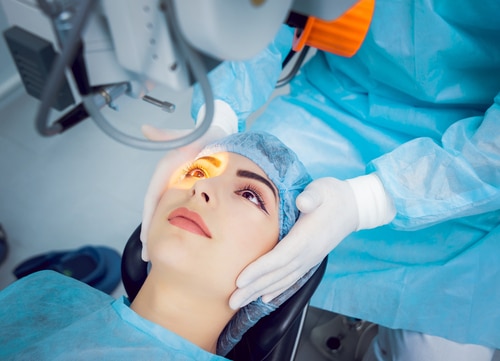
Both PRK and LASIK belong to a category of procedures called laser vision correction.
The goal with laser vision correction is to reshape your cornea (the clear front surface of your eye) so that light focuses properly on your retina. When light doesn’t focus correctly, you experience blurry vision at various distances.
During these procedures, an eye surgeon uses a precise laser to gently remove microscopic amounts of corneal tissue. This reshaping corrects the way your eye bends light, resulting in clearer vision.
The conditions these procedures treat include nearsightedness (trouble seeing distant objects clearly), farsightedness (difficulty focusing on close objects), and astigmatism (blurred vision at all distances due to an irregularly shaped cornea).
How Each Procedure Works
The main distinction between PRK and LASIK lies in how your eye surgeon accesses the corneal tissue that needs reshaping.
The LASIK Procedure
LASIK has become one of the most commonly performed vision correction procedures. During LASIK, your surgeon creates a thin flap in the outer layer of your cornea. This flap is gently lifted to expose the underlying corneal tissue. The laser then reshapes this tissue to correct your vision. Once complete, the flap is carefully repositioned, where it naturally adheres without stitches.
The entire LASIK procedure typically takes about 10 to 15 minutes per eye. Most patients notice improved vision within 24 hours.
The PRK Procedure
PRK takes a different approach. Instead of creating a flap, your surgeon gently removes the thin outer layer of cells on your cornea (called the epithelium). The laser then reshapes the exposed corneal tissue, just as it does in LASIK. After the reshaping is complete, the epithelium naturally grows back over the following days.
PRK also takes about 10 to 15 minutes per eye. While the procedure itself is quick, the initial healing process takes longer than LASIK since your eye needs time to regenerate that outer cell layer.
Recovery and Timeline
Recovery experiences differ between PRK and LASIK, and this is often a deciding factor for many patients.
LASIK Recovery

Because LASIK preserves most of the corneal surface by using a flap, healing tends to be faster. Many patients experience minimal discomfort after the procedure. You may feel some mild irritation or grittiness for a day or two, but this usually resolves quickly.
Vision improvement with LASIK is rapid. Most people see clearly enough to return to work and normal activities within a day or two. You’ll need to avoid rubbing your eyes and follow your surgeon’s guidelines about activities like swimming or contact sports for a few weeks, but daily life resumes relatively quickly.
PRK Recovery
PRK recovery takes a bit more patience, but the wait is worth it for many patients. Since the outer layer of your cornea needs to regenerate, you’ll experience a longer initial healing period. Your surgeon will place a special contact lens on your eye to protect it while the epithelium grows back, typically over three to five days.
During this time, you may experience more discomfort than with LASIK, including sensitivity to light, tearing, and a gritty sensation. Vision improvement is gradual. While you’ll notice changes in the first week, it can take several weeks for your vision to stabilize and sharpen fully.
Most people can return to work within a week, though your surgeon will provide personalized guidance based on your healing progress.
Who Is the Right Candidate for Each?
Your eye anatomy, lifestyle, and occupation all play a role in determining whether PRK or LASIK is the better choice.
Best Candidates for LASIK
LASIK works well for people with adequate corneal thickness. Your cornea needs to be thick enough to create the flap and still have sufficient tissue remaining for the laser reshaping. If you have a moderate prescription and healthy corneas, LASIK is often an excellent option.
LASIK also suits patients who want the fastest recovery possible. If your job requires you to get back to normal activities quickly, or if you simply prefer a shorter healing timeline, LASIK’s rapid visual recovery may be appealing.
Best Candidates for PRK
PRK is often recommended for patients with thinner corneas. Since there’s no flap creation, PRK preserves more of your corneal structure. This makes it a safer choice if your corneas don’t have enough thickness for LASIK.
People with active lifestyles or who play contact sports may also benefit from PRK. Without a corneal flap, there’s no risk of flap dislocation from trauma or impact. Certain professions, particularly in the military or law enforcement, may require PRK because of this added stability.
The specialists at Mueller Vision will thoroughly examine your eyes to determine which procedure aligns with your individual needs.
Long-Term Results and Outcomes

When it comes to final visual outcomes, PRK and LASIK are very similar. Studies show that both procedures provide excellent long-term vision correction with high patient satisfaction rates.
The laser technology and precision used in both procedures are nearly identical. The main difference is the path to get there. Once your eyes have fully healed, whether through LASIK’s faster recovery or PRK’s gradual improvement, the quality of your vision will be comparable.
Both procedures offer long-lasting results. Most patients enjoy clear vision for many years. In some cases, minor vision changes can occur over time due to natural aging or other factors. If needed, enhancement procedures can be performed to fine-tune your vision.
The decision between PRK vs LASIK comes down to which approach better suits your eyes, lifestyle, and comfort with the recovery process, not which one delivers superior results.
Making Your Decision
Choosing between PRK and LASIK is a personal decision that should be made with professional guidance. Your eye anatomy is unique, and a comprehensive evaluation will reveal which procedure is safest and most effective for you.
Consider your lifestyle and schedule. If you can accommodate a longer recovery period and want to preserve maximum corneal structure, PRK may be your ideal choice. If you prefer rapid visual recovery and have the corneal thickness to support it, LASIK could be the better fit.
Schedule a comprehensive evaluation at Mueller Vision in Fort Worth, TX, to discuss your vision goals and learn which procedure is right for your eyes and lifestyle.